Countless collections of comic books have surfaced over the years. Some of these collections only include a handful of comics, while others contain thousands. Every now and then, a collection is found that is so exceptional that it becomes recognized as a pedigree.
The Edgar Church/Mile High find was the first original owner collection to ever be called a pedigree.
Though this collection isn't the oldest in existence, it remains the most famous pedigree in the hobby today and is the reason collectors started to call certain collections pedigrees.
CGC currently recognizes 61 pedigree collections. If you are the current owner of an exceptional comic book collection, CGC is more than happy to discuss the potential pedigree status with you. Please feel free to call and ask to speak with a Pedigree Specialist.
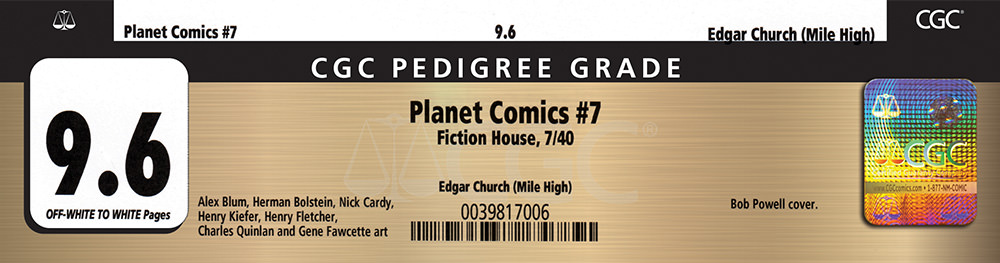
Pedigree Label (Gold)
This label is applied to any comic book that is part of a CGC recognized pedigree collection.
CGC Recognized Pedigrees
{{card.Name}}
{{card.Name}}
Disclaimer: The purchase of an uncertified pedigree book from any collector or dealer does not obligate CGC to recognize the book in question as a pedigree copy.
CGC Pedigree Status Criteria
The collection must be original owner.
This means that the books must have been bought off the newsstand as they came out. For example, a collector cannot buy a high-grade run of 1940s comics from various sources and expect it to be considered a pedigree. The original owner need not currently own the comics for the collection to be considered for pedigree status.
The collection must be of vintage material.
This means that a large collection consisting of comics from the 1970s to present cannot be considered a pedigree. In fact, until the sale of some key White Mountain books in a Sotheby’s auction in the early 1990s, Silver Age comics were not accepted as pedigree collections. Comic books from 1966 and after are relatively common in high grade compared to earlier issues. This occurred as a direct result of a tremendous explosion in the number of collectors in fandom in the mid-1960s. Collections that are primarily from 1966 and after must have average grades of at least 9.4 to be considered a pedigree.
The collection must consist of a considerable number of comics.
Most pedigree collections consist of at least 1,000 books and some number over 10,000 comics. The collections that consist of fewer books, such as the Allentown and Denver collections, must include extremely rare, important, and/or key material.
The collection must be high-grade.
Comics from the Silver Age in general would have to be 9.2 and higher, and a collection of exclusive Silver Age material must have an average grade of 9.4. Golden Age comics would have to be high-grade as well. For example, the Lost Valley collection consisted of many golden age books from before 1941 that were technically mid-grade, but were almost across the board the highest graded copy for that book. Page quality must be nice as well.
Many of the pedigree collections were recognized and accepted by the hobby before CGC came into existence in late 1999.